FAUST

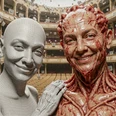
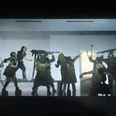
Goethe's "Faust" appears at Schauspiel Köln in an interpretation that transforms the drama's inherent conflict between restlessness, seduction and moral introspection into a contemporary stage laboratory. Kay Voges' production takes up the idea of the "moment" and condenses it into an experiment on perception: together with live photographer Marcel Urlaub, the space becomes a mixture of light room and darkroom in which images are created and projected, documenting and questioning the events at the same time. The tragedy unfolds predominantly in nocturnal surroundings, interspersed with fire, reflections and snapshots that make the fragmented state of the characters visible. Faust appears as a seeker, Mephisto as his dialectical counter-principle, Gretchen as a vulnerable force in the midst of a moral tangle that leads to a fatal decision. The concept does not use technical means for effect, but to reflect on identity, responsibility and the fleeting nature of human motives. This approach gives you access to Goethe's text, interweaving classical materiality with contemporary thinking and creating a resonance space for your own questions about orientation and scope for action.
With English surtitles
With English surtitles
Dates
Good to know
Eligibility
Bad Weather Offer
Suitable for any Weather
Target Group Teenager
Target Group Adult
Target Group the Elderly
for individual guests
More information
No break.
Our recommendations

Nearby